


Conveyancing in Melbourne: What You Need to Know
Navigating the Melbourne property market is a high-stakes game. Whether you’re securing a Victorian terrace in Carlton or a modern build in Craigieburn, the “legal heavy lifting” known as conveyancing in Melbourne is what actually transforms a signed piece of paper into a set of keys in your hand.
In 2026, the process is more digital and regulated than ever. This guide breaks down the journey from contract signing to settlement, ensuring you know exactly what to expect.
1. The Pre-Contract Phase: The Section 32
In Victoria, the journey starts with the Vendor’s Statement, commonly called a Section 32. This document is a legal disclosure where the seller must reveal everything that could affect the property’s value or your enjoyment of it—from zoning restrictions and easements to outstanding rates.
Pro Tip: Never sign before your conveyancer reviews this. In the current landscape, updated rules regarding land tax thresholds and building insurance certificates make professional review non-negotiable.
2. Contract Signing and the “Cooling-Off” Period
Once you and the vendor agree on a price, you sign the Contract of Sale.
- The 3-Day Rule: Most private sales in Melbourne come with a three-business-day cooling-off period. This is your “safety net” to withdraw, though it typically costs $100 or 0.2% of the purchase price (whichever is greater).
- Auction Exception: If you buy at auction, there is no cooling-off period. You are committed the moment the hammer falls.
3. The Process for Conveyancing in Melbourne : Step-by-Step
Once the contract is unconditional (meaning finance and inspections are approved), the real work begins.
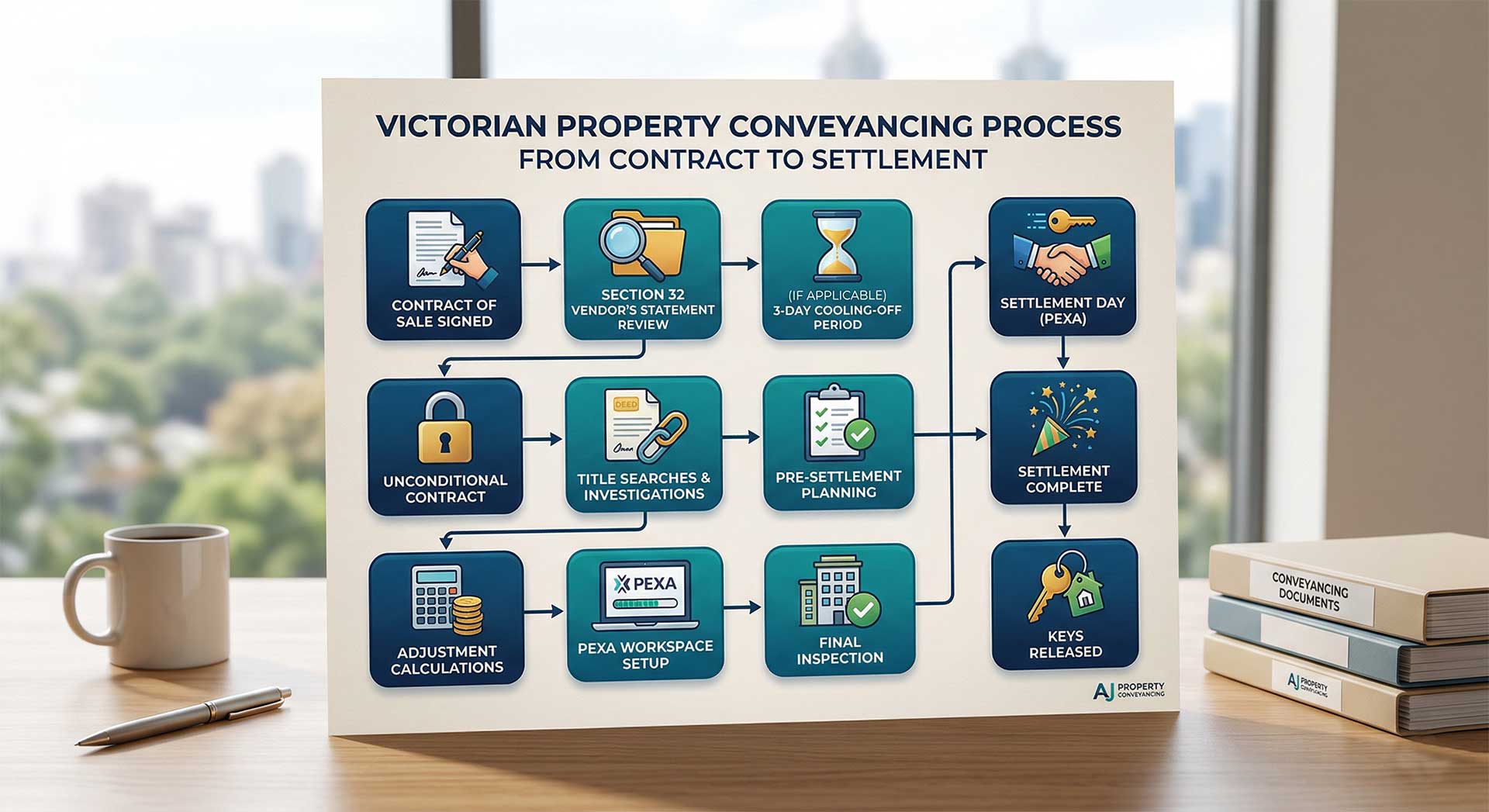
- Title Searches: Your conveyancer verifies the title to ensure there are no hidden encumbrances or caveats.
- Transfer Documents: Preparation of the “Transfer of Land” document and ensuring all stamp duty requirements (handled primarily through the State Revenue Office’s digital portals) are met.
- Adjustments: Your conveyancer calculates the “pro-rata” share of council rates, water rates, and land tax so that the seller pays up to the day of settlement, and you take over from there.
- PEXA Coordination: Almost all Melbourne settlements now occur via PEXA (Property Exchange Australia). This is an electronic platform where banks and conveyancers swap digital funds for a digital title in real-time.
Typical Timelines in Melbourne
While every deal is unique, Melbourne property settlements usually follow these standard windows:
- 30 Days: A “fast-track” settlement, usually for cash buyers or those with pre-approved, simple finance.
- 60 Days: The Melbourne “gold standard.” It provides enough time for banks to process mortgages and for residents to pack.
- 90 Days: Common for vendors who haven’t found their next home yet or for more complex investment portfolios.
What to Look for in a Local Melbourne Conveyancer
Choosing a conveyancer isn’t just about finding the lowest price; it’s about finding a partner who understands the nuances of Victorian property law. Look for:
- Local Expertise: A firm that knows Melbourne councils and the specific quirks of Victorian titles.
- Fixed-Fee Pricing: Avoid “hidden disbursement” traps. A transparent, fixed-fee structure allows you to budget accurately for your move.
- Personalized Service: Large “conveyancing factories” often treat you like a file number. Boutique firms offer more direct access to the person actually handling your life’s biggest transaction.
Featured Example: AJ Property Conveyancing
If you’re looking for a firm that hits that “sweet spot” of professional expertise and personalized care, AJ Property Conveyancing is a prime example of a Melbourne-accessible boutique firm.
Operating within Victoria, they specialize in a fixed-fee model that eliminates the stress of escalating legal costs. What truly sets them apart is their multilingual service, catering to Melbourne’s diverse community. This cultural and linguistic accessibility ensures that complex legal jargon is translated into clear, actionable advice, making the daunting process of buying or selling property feel significantly more grounded.
4. Settlement Day: The Finish Line
On settlement day, you don’t actually “go” anywhere. Your conveyancer and the bank finalize the digital exchange on PEXA. Once the “Settlement Complete” notification hits your inbox, the real estate agent is authorized to release the keys.
Pro Tip (2026 Update): As of March 2026, the Victorian Registrar of Titles has strictly limited “self-lodgement” for property documents. Engaging a licensed professional is now effectively a legal requirement for almost all standard residential transfers to ensure security and accuracy in the digital register.
Conclusion
Conveyancing in Melbourne is the bridge between a dream and a deed. By understanding the timeline and partnering with a boutique, transparent firm like AJ Property Conveyancing, you can navigate the complexities of Section 32s and PEXA settlements with confidence. Ready to make your move? Ensure your legal representation is as solid as the foundations of your new home.